

January Is Radon Awareness Month | How Common Is Radon in Midwest Homes?
Winter has arrived in full swing! With your home being closed up, the radon will wreak havoc. Despite the misconception, radon is very common in homes, and levels are often dangerously high. At American Waterworks, we offer both radon testing and mitigation systems to restore your peace of mind to keep you and your loved ones safe.
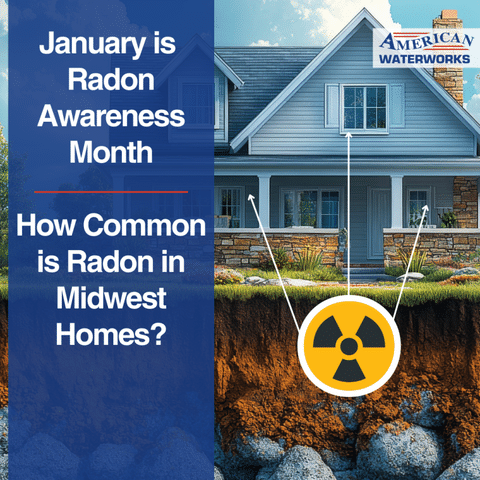
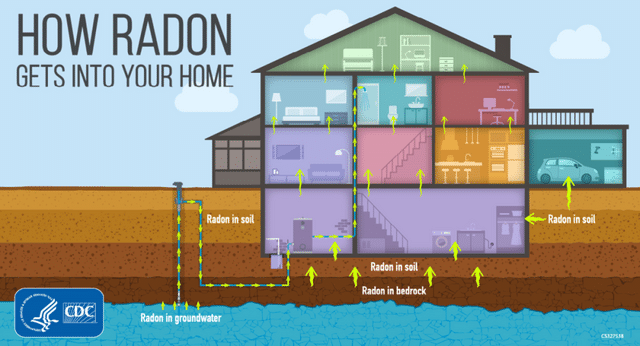
Radon is an odorless, tasteless, and colorless radioactive gas that is caused by the breakdown of soil around a home. The only way to detect radon is through proper radon testing. Radon has been linked to over 20,000 lung cancer-related deaths in the United States yearly. Additionally, it has become the second leading cause of lung cancer. Additionally, it has become the second leading cause of lung cancer compared to smoking. While there are many mysteries surrounding radon, it is quite common in homes, especially in the Midwest.
How Common Is Radon in Homes?
You may think your home is radon-free, but this toxic gas could still be lurking. In Minnesota, 2 in 5 homes have high radon levels (MN, 2025), meaning 40% of homes are being affected. What makes Minnesota such a hot spot for radon? Its unique geological makeup and cold climate are to blame. During the winter, a home's heating systems tend to draw in radon gas from the soil, leading to increased levels in homes. Furthermore, many homeowners use basements as living spaces, which can lead to increased radon exposure. Below are the common levels of radon in our service area (World, 2025):
- MN: 4.6 pCi/L
- ND: 6.0 pCi/L
- IA: 6.1 pCi/L
- WI: 5.7 pCi/L
No matter which state you live in, all the levels above are dangerously high. To prevent these levels from increasing and harming your family's health, it is recommended to start with a radon test.
 Radon Testing & What It Means
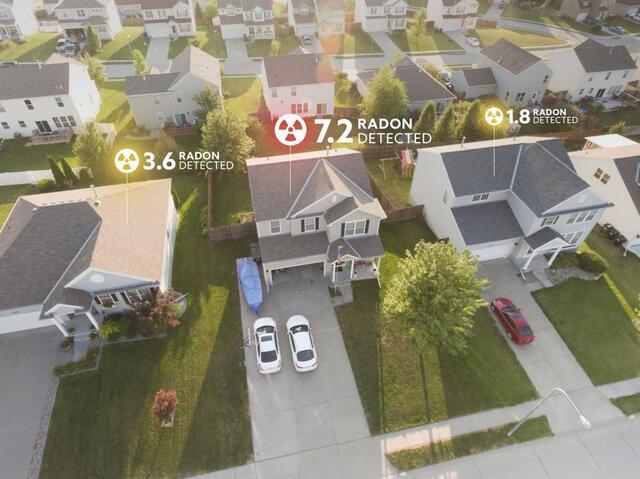
You may be unsure where to find a radon test near you. There are two affordable options available: you can purchase a radon test at your local hardware store or elect for the assistance of a radon specialist, like American Waterworks. According to the Environmental Protection Agency, a radon test that indicates an exposure level of above 4 pCi/L indicates a mitigation system should be installed (CDC, 2025). Even if the test shows 3 pCi/L, it is still an actionable level. At American Waterworks, we recommend radon testing if you have any concerns regarding radon in your home.
High Radon Level? The Next Steps
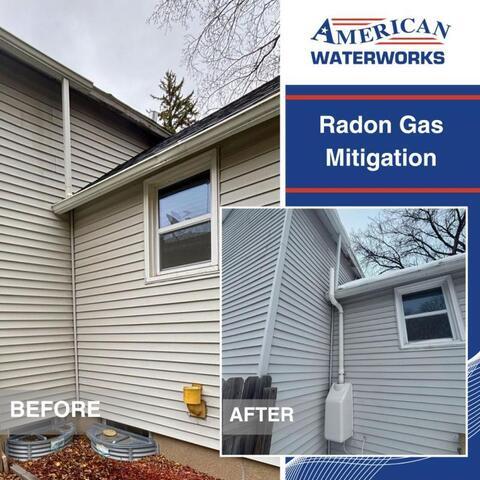
The tests show a level higher than 3.0 pCi/L; now it is time to act. At American Waterworks, we offer radon mitigation systems installed by an experienced radon specialist. A radon mitigation system will reduce the concentration of radon gas in the interior air to minimal levels recommended by the Environmental Protection Agency. The product consists of a large-diameter PVC pipe and an in-line fan that sucks the affected air from below your foundation, redirected from the stack effect, and out to the exterior of your home. Our crew will drill a hole to create a suction point, then vent it through a PVC pipe and connect it to the drilled hole and vent it away. Finally, the radon entry points are sealed. Our radon mitigation systems are custom-created to fit your home's structure.
Don't wait until it's too late, get started with your peace of mind today. American Waterworks offers both radon testing and radon mitigation system installations. At American Waterworks, we have professionally trained, certified crews that will ensure your radon risk is reduced. If you are interested in signing up for your FREE estimate, click HERE to get started!
Sources
Centers for Disease Control and Prevention. (2025). Radon and your health. Centers for Disease Control and Prevention. https://www.cdc.gov/radon/about/index.html
Two in five Minnesota homes have high radon levels, posing cancer risks. Two in five Minnesota homes have high radon levels posing cancer risks - MN Dept. of Health. (2025). https://www.health.state.mn.us/news/pressrel/2024/radon010824.html
World Population Review. “Radon Levels by State 2025.” World Population Review, 18 Dec. 2025, worldpopulationreview.com/state-rankings/radon-levels-by-state. Accessed 30 Dec. 2025.